
A Guide to Zippers
Everything you need to know about zippers—parts, types, sliders, sizing and care—explained clearly, from the team that builds them.
Introduction to Zippers
Zippers are one of the most elemental but revolutionary inventions. They drastically changed both the fabric and fashion industries. The patent for the first prototype of the zipper was owned by the inventor of the sewing machine, Elias Howe, in 1851.
The standard modern zipper is weather resistant, durable, and available in a variety of colors, materials, and sizes. Zippers are used on many different items including clothing, vehicle covers, bookbags, handbags, and more.
Quick Guide to Zippers
Standard Zipper Parts
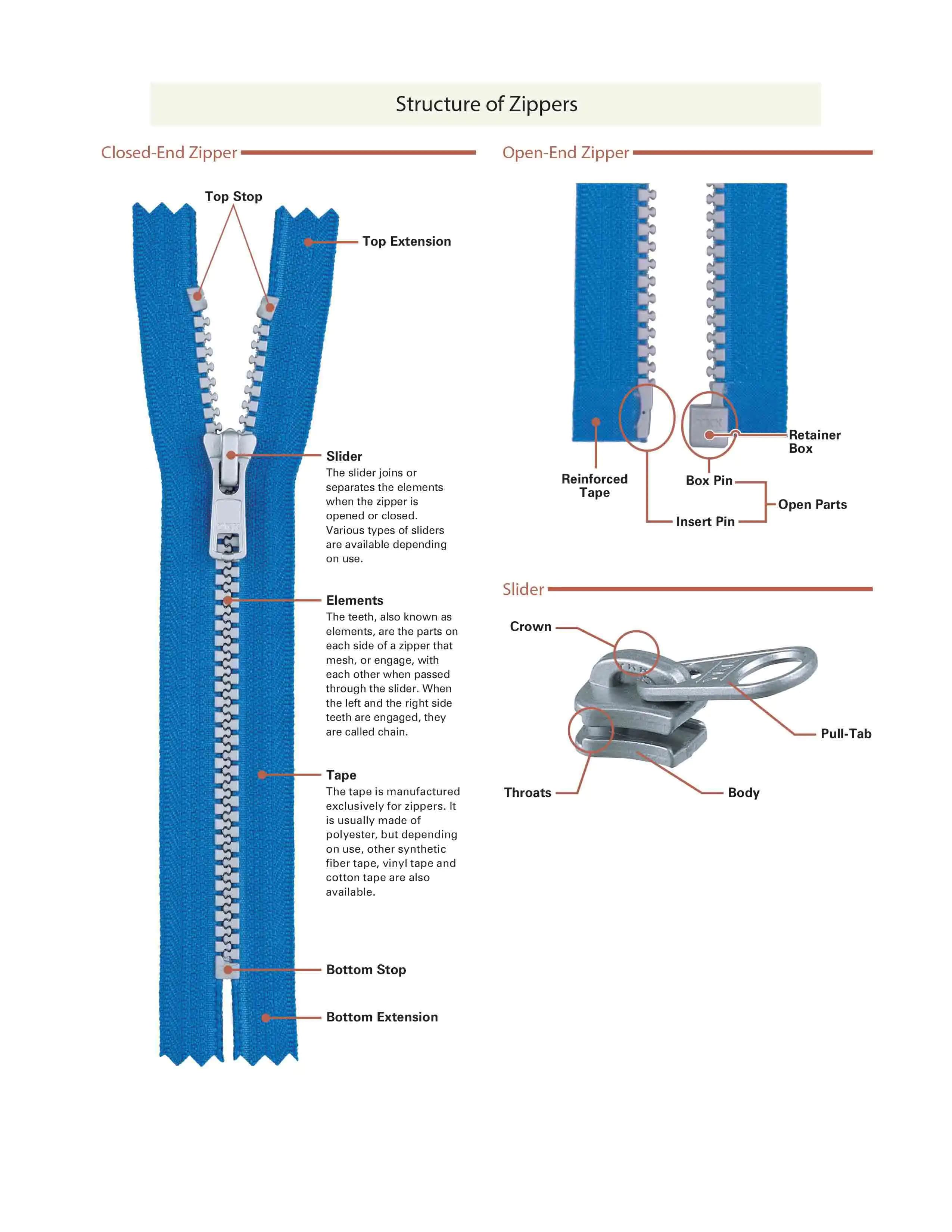
- The elements (or “zipper chain”) refer to the teeth or coil that interlock with each other and run along the middle of the zipper.
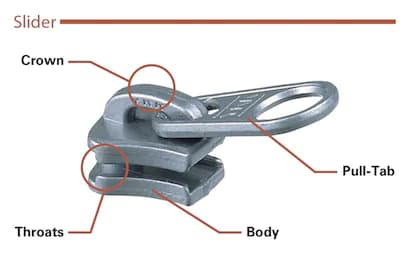
- The slider is the pulling mechanism that opens and closes the interlocking elements (more on slider parts below).
- The zipper tape is the fabric attached to either side of the elements.
- Top and bottom stops refer to the small pieces of metal or plastic placed at either end of the zipper to stop the slider from falling off the zipper chain.
- Top and bottom extensions refer to the pieces of fabric at either end of the zipper unit.
- The insertion pin is the small, straight piece of metal or plastic where the slider is led into the chain, while the retainer box is the square-shaped piece that stops the slider at the end of the chain and holds it in place.
Types of Zippers
When shopping for sliders, note that there are ZIPLON®-compatible sliders and VISLON®-compatible sliders.
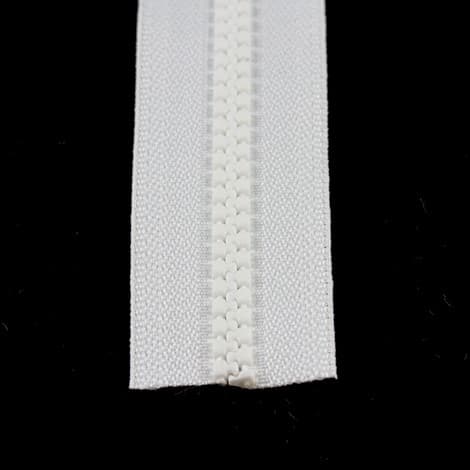
VISLON® Zippers have a closure structure resembling “teeth.” They’re made of plastic teeth injected onto the tape. Stiffer than coil zippers (see below), they typically work better for straight applications.
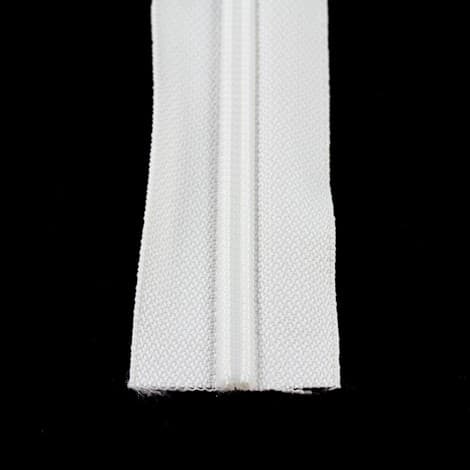
ZIPLON® Zippers are often referred to as “coil” zippers because they have a closing structure where the teeth resemble “coiled” plastic. This coiling structure allows the zipper to bend well around curves. This makes them great for “smile” curtains, boat covers, cushions, or U-shaped openings in boat enclosures.
Metal zippers are commonly used in applications that don’t require weather capability.
Concealed zippers , also called “invisible zippers,” are designed so that the elements are hidden under the tape.
Zipper Sliders
When shopping for sliders, note that there are ZIPLON®-compatible sliders and VISLON®-compatible sliders.
Zipper Chains
Zipper Pulls
Handbags and similar products often have zipper pulls (or pull cords). These pulls allow you to easily use the zipper by extending the length of the slider. This makes it much easier to use a purse, backpack, or any other zipper with a slider that's too small or difficult to reach. We offer quality-made, easy-to-use zipper pull cords for your next project.
Tips of the Trade
- Plastic zippers cannot be repaired if a tooth breaks off while metal ones can. However, plastic zippers typically last longer and are more resistant to dirt, corrosion, and UV rays.
- For sticky zippers, try applying a zipper cleaner and lubricant.
- Before sewing on the zipper, apply seam tape to the fabric to hold in place.
- The larger the radius of the zipper tape, the less chance there is of puckering.
YKK Zipper Sizes and Styles: How to Read YKK Product Numbers
YKK is the world’s largest supplier of quality zippers as well as other fastening products. Because their products are so ubiquitous, it’s useful to know how to read their product names, which includes YKK zipper sizes and features.
YKK zippers and sliders are named based on a certain set of criteria. Item #280085, for example, is listed as YKK®VISLON® #8 Separating Zipper Automatic Lock Short Single Pull Metal Slider #VFUVOL-86 DA E 5/8” 60" Black.
Here’s what that means:
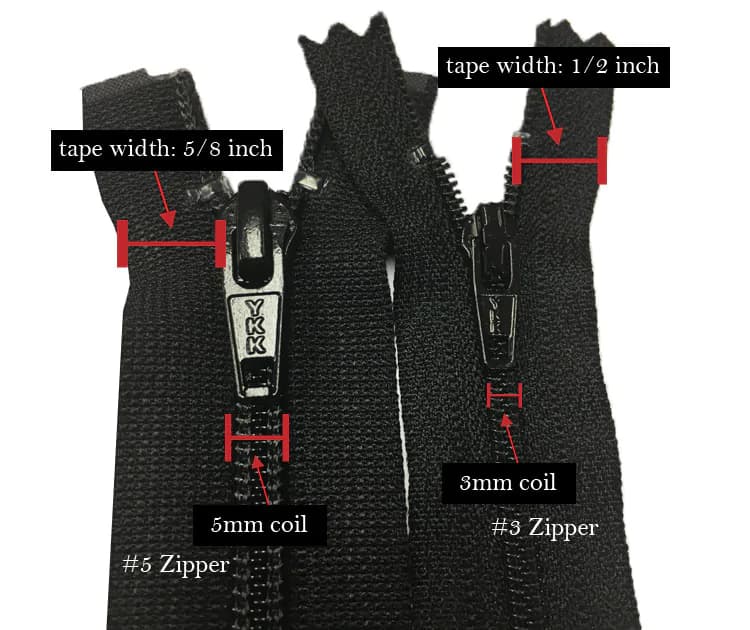
#8 = chain size (8mm chain width)
Separating = zipper has finished ends
Automatic Lock = slider locks in place (also called AutoLok)
Short Single Pull Metal = all descriptors for the type of slider
VF = VISLON®
U = reversible automatic lock
V = black nickel
OL = open-end left insert
A = another reference to automatic lock
E = enamel
5/8” = width of tape on either side of the chain
60” = total roll length
Black = color
Applications Based On Zippers
The zippers and parts outlined above can all be used in custom projects or for zipper replacements and repair.
For industrial purposes, plastic zipper chains and sliders with polyester tape are generally the most stable. Plastic is lightweight, corrosion resistant, and weather stable while polyester offers high strength and low stretch. However, choosing the right zipper will depend on your specific application.
The following is a basic guide and is not intended to be a comprehensive list:
ZIPLON® (coil) = curved applications (marine enclosure panels, “smile” curtains, tents)
Plastic = marine, saltwater, outdoor settings (awnings, boat covers)
Metal = applications that don’t encounter extended exposure to the outdoors (apparel and fashion, bags)
Concealed zippers = uses where aesthetic is important (apparel and fashion, bags, decorative pillows and cushions)
How Do Zippers Break?
Almost everyone has experienced the unfortunate event of a zipper breaking while zipping or unzipping it. There are a few common reasons why a zipper may break.
Zipper is stuck: If your zipper is stuck, there is a good chance that there is something blocking the slider from moving. Fabric or loose threads are common reasons why a zipper gets stuck. You can use a zipper lubricant (like IOSSO® E-Z Snap, Zipzap, or YKK® ZIPPY COOL®) to lubricate the slider and free your zipper.
Zipper will not close or keeps popping up: The zipper may have a thread or cloth stuck in it, crooked teeth, or the slider may be broken. If fixing the teeth or freeing the zipper does not work, you may need to replace the zipper.
Slider pulls off: If the slider is coming off, you should replace it with a new one. Make sure to choose a slider that is the correct size for your zipper and its teeth.
Some Common Zipper Questions
Final Notes
Disclaimer:
The purpose of this guide is to give fabricators some general guidelines and product information.
This guide should not be considered as the sole source of information on zippers. This guide is strictly informational.